

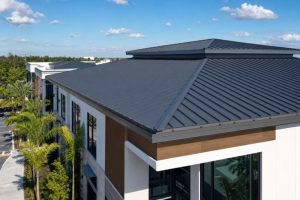
 Are metal roofs good for commercial buildings in Florida? The data speaks for itself: metal roofs can protect commercial properties for 40 to 70 years, and standing seam systems installed the right way handle wind gusts of 140 mph or higher. These numbers matter when you’re making a major investment in your commercial property. We understand that choosing the right roofing system requires dissecting the complete picture. You need to weigh the metal roof in Florida pros and cons against your budget and long-term goals. This piece breaks down how much is a metal roof in Florida and explores the types of metal roofs in Florida. It helps you determine the best metal roof for Florida’s unique climate challenges.
Why Metal Roofs Work Well for Commercial Buildings in Florida
Florida’s climate tests commercial roofing systems in ways few other states can match. Hurricane-force winds, relentless UV exposure and daily temperature swings create constant stress for your roof. Metal roofing systems handle these challenges through specific design features and material properties.
Superior Wind Resistance Against Hurricanes
Wind resistance separates adequate roofing from systems that protect your investment during storms. Many metal roofing systems are tested for wind speeds exceeding 150 miles per hour. Standing seam systems perform even better. Certain profiles can handle wind speeds exceeding 200 miles per hour in tested conditions.
The performance comes from how panels connect to your building. Interlocking systems and concealed fasteners reduce uplift during hurricanes. Steel roofs can withstand winds up to 160 mph, making them suitable for Category 4 and 5 hurricane zones. Post-Hurricane Irma inspections in Monroe County, Florida found that metal roofs fared far better than asphalt shingle roofs.
Long Lifespan Compared to Other Roofing Materials
Traditional asphalt shingles need replacement every 15-20 years in Florida’s harsh climate. Architectural shingles last 20-25 years, while clay and concrete tile reach 30-50 years. Steel roofs can last between 40 to 70 years if you maintain them properly.
This extended lifespan changes the financial equation. You replace asphalt shingles three to four times over the same period one metal roof protects your building. Commercial roof replacement disrupts operations and carries big costs, so longevity becomes a practical advantage.
Energy Efficiency and Cool Roofing Benefits
Metal roofing reflects solar radiant heat rather than absorbing it. Homeowners can expect cooling savings of 15-25% after switching to metal roofing. Some property owners report 20-40% reductions in energy costs. Reflective metal surfaces reduce solar heat gain when paired with coatings designed for high reflectance.
Energy-efficient roofs also lead to insurance savings of 25-45% due to wind mitigation benefits. Cool roof coatings lower roof temperatures by up to 50°F and reduce strain on HVAC systems during Florida’s brutal summers.
Low Maintenance Requirements
Metal roofs need minimal upkeep when you compare them to tile or traditional shingles. The material resists mold, rot and insects, which matters in humid climates. Regular inspections remain necessary for maximum longevity, but the day-to-day maintenance demands stay low. A well-maintained metal roof delivers improved energy efficiency and prevention of major issues.
Types of Metal Roofs for Commercial Buildings in Florida
Selecting the right metal roof type depends on your commercial building’s architectural requirements, slope, and budget. Three main options dominate Florida’s commercial roofing market. Each offers distinct installation methods and performance characteristics.
Standing Seam Metal Roofs
Standing seam systems use concealed fasteners beneath raised interlocking seams. This eliminates exposed penetration points. The panels connect through clip systems that accommodate thermal expansion and contraction without stressing attachment points. These systems work on roofs with pitches as low as 1:12 and are suitable for flat or nearly flat commercial buildings.
Commercial property owners can choose between snap-together systems and mechanically seamed profiles. Snap-together panels install faster with clean architectural lines. Mechanically seamed systems deliver watertight 90° or 180° seams and higher wind uplift ratings. Standing seam panels range from 22 to 24 gage. This provides superior thickness compared to other metal roofing options. Service life reaches 40 to 60+ years with proper installation.
5V Corrugated Metal Roofs
5V corrugated panels feature exposed fasteners that penetrate through the panel into the substrate. This traditional profile offers 24″ coverage width with 1/2″ rib height spaced 12″ on center. These panels are available in 29 gage standard or 26 gage optional configurations and require minimum slopes of 3:12.
The exposed fastener design simplifies installation. Material costs reduce by about 50% compared to standing seam. Corrugated panels suit agricultural buildings, warehouses, and projects where budget constraints outweigh esthetic priorities.
Metal Tiles and Shingles
Metal tiles and shingles replicate traditional roofing materials while delivering metal’s durability. These profiles mimic clay tiles, slate, or asphalt shingles with three-dimensional textures. Installation requires minimum 4:12 pitch. This limits their application on low-slope commercial buildings. Cost exceeds standing seam options and positions them as premium esthetic choices rather than economical solutions.
Potential Drawbacks of Metal Roofs for Commercial Properties
Metal roofs deliver exceptional performance in Florida, but four specific drawbacks deserve your attention before you make a purchasing decision.
Higher Upfront Installation Costs
The original investment for metal roofing exceeds traditional materials. Both materials and specialized labor required for installation cost more than asphalt shingles. This upfront financial commitment can be substantial and requires you to think about your budget carefully. But durability and low maintenance offset these costs over the building’s lifetime.
Salt Air Corrosion Near Coastal Areas
Salt air accelerates corrosion on certain metal types. Buildings within 3,000 feet of the ocean face the most pronounced corrosion risk. Many metal roof manufacturers provide no warranty for panels installed within this proximity to saltwater. Standard Galvalume products aren’t warranted for heavy salt-air environments, within 1,000 to 1,500 feet of the shoreline.
The steel substrate can corrode at cut edges or where coatings sustain damage. Aluminum roofing becomes the recommended solution then. Aluminum forms a passive oxide layer that resists salt-air corrosion without heavy coatings. For properties within a mile or two of active salt air, aluminum with high-quality PVDF finish offers safer and longer-lasting protection.
Noise Concerns During Heavy Rain
Metal roofs can produce more noise during rain or hail than other materials. Research shows rain on metal roofs measures around 52 dBA compared to 46 dBA on asphalt shingles. Most humans cannot distinguish sounds less than eight decibels apart. This difference is undetectable. Proper attic insulation and quality underlayment substantially dampen sound.
Denting from Hail or Debris
Hail can dent or puncture metal roofs depending on conditions. Denting is cosmetic and doesn’t require structural improvements. Punctures cause leaks but remain uncommon, especially with thicker gage metal. Lower gage numbers indicate thicker metal. A 24-gage roof resists damage better than 29-gage systems.
How Much Does a Metal Roof Cost for Commercial Buildings in Florida
Budgeting for a commercial metal roof requires perusing both immediate expenses and long-term financial performance. The numbers vary based on system type, building specifications and regional labor rates.
Price Range by Metal Roof Type
Standing seam systems range from USD 10.00 to USD 16.00 per square foot installed, while some projects reach USD 12.00 to USD 22.00 per square foot. Corrugated metal roofing costs USD 7.00 to USD 12.00 per square foot. 5V corrugated panels fall between USD 5.00 to USD 12.00 per square foot. A 10,000-square-foot commercial facility will need USD 80,000 to USD 150,000 for a professional metal system installation.
Installation Costs and Labor
Labor accounts for 60% to 70% of your total roofing cost. Standing seam installation requires USD 5.00 to USD 8.00 per square foot in specialized labor. Skilled metal roofing installers charge USD 3.00 to USD 10.00 per square foot depending on project complexity.
Long-Term ROI and Life Cycle Costs
Costs run approximately 30% higher than flat roofs at first, but metal roofs cost 68% less at the 60-year mark. Most commercial property owners break even within 10 to 15 years when factoring in energy savings and avoided replacement costs. Lifecycle cost analysis assesses total ownership by including installation expenses and maintenance over the roof’s lifespan.
Insurance Discounts and Incentives
Insurance discounts for metal roofs range from 5% to 35%. One Florida homeowner saw annual premiums drop from USD 30,000 to USD 6,000 after metal roof installation. A windstorm mitigation inspection documents your roof’s safety features and helps you qualify for maximum insurance discounts.
Metal roofs deliver exceptional protection for Florida commercial buildings. They last 40-70 years and resist hurricanes. The upfront investment runs higher than traditional materials, but energy savings and avoided replacements provide payback within 10-15 years. Assess your building’s distance from the coast and budget constraints before you decide. Choose the system that matches your property’s specific needs and financial goals.
We Provide Commercial Roofing Services in South Florida
Our commercial roofing services in South Florida provide property owners, facility managers, business owners, and commercial developers with dependable roofing solutions designed around the unique demands of the local climate.
> Learn More
FAQs
Q1. What are the main disadvantages of installing a metal roof on a commercial building? The primary challenges include higher upfront installation costs compared to traditional materials, potential salt air corrosion for buildings near coastal areas (especially within 3,000 feet of the ocean), increased noise during heavy rain events, and the possibility of denting from hail or falling debris. However, many of these concerns can be mitigated through proper material selection, such as choosing aluminum for coastal properties and using adequate insulation to reduce noise.
Q2. Which metal roofing system works best for commercial properties? Standing seam metal roofs are typically the best choice for commercial buildings due to their concealed fastener design, superior wind resistance (exceeding 200 mph in tested conditions), and 40-60+ year lifespan. They work on roofs with pitches as low as 1:12 and provide excellent protection against Florida’s hurricanes. For budget-conscious projects, 5V corrugated panels offer a more economical option at roughly 50% less cost than standing seam systems.
Q3. Can metal roofs help reduce insurance premiums in Florida? Yes, metal roofs typically qualify for insurance discounts ranging from 5% to 35% due to their superior wind resistance and durability. Some Florida property owners have reported dramatic premium reductions, with annual costs dropping from $30,000 to $6,000 after installation. A windstorm mitigation inspection can document your roof’s safety features and help you qualify for maximum insurance discounts.
Q4. How do metal roofs perform in Florida’s hurricane conditions? Metal roofing systems excel in hurricane-prone areas, with many tested for wind speeds exceeding 150 mph. Standing seam systems can withstand winds over 200 mph, and steel roofs resist winds up to 160 mph, making them suitable for Category 4 and 5 hurricane zones. Post-Hurricane Irma inspections showed metal roofs performed significantly better than asphalt shingle roofs, thanks to their interlocking systems and concealed fasteners that reduce uplift.
Q5. Are metal roofs cost-effective for commercial buildings despite higher initial costs? While metal roofs cost approximately 30% more initially than flat roofs, they prove cost-effective over time. Most commercial property owners break even within 10-15 years when considering energy savings of 15-25%, avoided replacement costs, and insurance discounts. At the 60-year mark, metal roofs cost 68% less than alternatives, as they last 40-70 years compared to asphalt shingles that require replacement every 15-20 years.
Contact Us (954-426-8050) For a Free Roof Evaluation
—
 About Monarch Roofing & Construction
Monarch Roofing and Construction proudly serves residential and commercial clients in South Florida with roofing, renovation, and new construction projects. Since 2005, our roofing services have been used all around Florida to meet the needs of homeowners and property managers, extending from Palm Coast to Miami. With our commitment to personalized service and high-quality craftsmanship, Monarch Roofing has established itself as a trusted industry leader dedicated to customer satisfaction. Our extensive service offerings include installation and repair of all types of roofs. As Florida State Certified Roofing and General Contractors, Monarch brings expertise to both residential and commercial projects, emphasizing professionalism, transparency, and cutting-edge technology in their approach. We specialize in hurricane preparedness and participate in the My Safe Florida Home Program, helping homeowners protect their properties from severe weather with expert inspections and recommendations.
> Learn More