
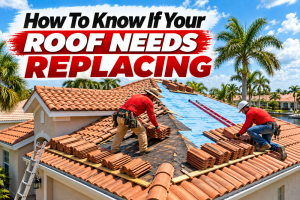
 So, how do I know if my roof needs replacing before it’s too late? Here’s what most Florida homeowners don’t realize: a leak is the last symptom, not the first. Most Florida roofs fail visually three to five years before water shows up inside. That’s why spotting the early signs you need a new roof is critical to avoiding interior damage that can get pricey. You need to watch for specific warning signals to tell if a roof needs replacement—from granule loss to structural sagging. We’ll walk you through the key signs your roof needs replacing and Florida-specific aging factors in this piece. You’ll also learn when you need a new roof versus when a repair is enough.
Early Warning Signs Your Roof Needs to Be Replaced
Most signs your roof needs replacement show up long before water drips from your ceiling. Asphalt shingles telegraph failure through visible surface changes that accelerate over time. You can catch these warning signals early. The difference between a controlled replacement and emergency repairs after interior damage sets in depends on this.
Loss of protective granules on shingles
Sand-like debris in your gutters might be the first clue something’s wrong. These mineral granules shield the asphalt layer from ultraviolet light and provide fire resistance while controlling heat absorption. Some granule loss is normal during the first few months of a new roof. The concern starts when you see heavy accumulation or bare patches where the black asphalt backing shows through.
A roof under 10 years old with substantial granule loss is abnormal. This may indicate storm damage or a manufacturing defect. Roofs between 15 and 25 years old with widespread granule loss usually signal the roof is approaching the end of its service life. You should have it inspected within weeks. The pattern matters as much as the amount. Even and gradual thinning reflects normal aging, while sudden loss concentrated in streaks or patches points to impact damage.
Shingle edges lifting or curling upward
Curling occurs when shingle edges turn upward while the center sinks and creates a bowl-shaped profile. This distortion breaks the watertight seal between shingles. Gaps form where wind-driven rain can enter. A shingle becomes susceptible to wind uplift during storms once it curls. The lifted edge acts as a catch for wind that can tear off entire tabs during severe weather events.
Curling shingles on more than 10 to 15 percent of a roof surface indicate the roof has entered its terminal phase. Poor attic ventilation traps heat and moisture beneath the roof deck. This can cause shingles to curl earlier than expected. Improper installation techniques can trigger premature curling as well. These include nailing too high on the shingle or failing to seal edges.
Visible cracks or missing pieces
Asphalt shingles become less flexible as they age. This makes them more likely to crack and break when exposed to storms. Missing shingles often stick out as a color change in your shingle pattern. Wind can tear off individual tabs during intense weather. Sometimes only one section of a tabbed shingle gets ripped away.
Bald or shiny spots on sun-facing slopes
Shiny patches on your shingles mean the underlying asphalt is exposed owing to granule loss. These bald spots appear smooth and discolored instead of textured. The exposed asphalt bakes in direct sun and degrades faster without granule coverage. A shingle with full granule coverage might have 8 to 12 years of life left, but the same shingle with bald spots can degrade in a fraction of that time.
Critical Structural Problems That Require Immediate Replacement
Surface damage tells you a roof is aging. Structural failure tells you it’s dangerous. The hidden skeleton beneath your shingles starts breaking down, and you’re looking at problems that go way beyond cosmetic concerns and enter the territory of potential collapse.
Sagging deck or roofline
Step into your yard and look at the roofline from a distance. It should form a straight, clean line from one end to the other. A visible dip, wave, or curve means something in the structural system is failing. The rot may have been progressing for two or three years by the time you see a sag from the street. A sagging roof is a structure that is failing, and the sag indicates that the supports are no longer able to bear the load. A sagging roof can collapse during heavy rain or wind loading from a tropical storm or hurricane.
Soft spots when walking on the roof
A spongy or bouncy sensation underfoot signals compromised decking below. Wood gets wet and stays wet, loses strength and begins to flex under pressure. These weakened areas can lead to rotting substrates and mold growth. Structural failure follows in severe cases. You should expose more decking to determine the extent of damages if at least 30 percent of the decking you found shows signs of deterioration, or if you notice widespread sagging across multiple structural beams.
Rotted or water-damaged wood underneath
Water travels unpredictably once it penetrates your roof system. It can enter near a vent or chimney, then move along framing and soak decking several feet away from the visible stain. Rotted wood loses strength and nails loosen. Roofing materials above the damage may no longer hold as designed. Look for decking that appears warped, discolored, or has soft spots when pressed from inside your attic.
Widespread leaks appearing in new places
Multiple leaks scattered across different areas signal system-wide failure rather than isolated damage. The roof has reached the end of its useful life when leaks multiply.
Florida-Specific Factors in Roof Replacement Decisions
Living here means your roof faces conditions that don’t exist in most other states. Climate factors play the most important role in determining how long a roof lasts in Florida. High humidity, intense UV rays and frequent storms accelerate wear and tear on roofing materials.
How Florida sun and storms age roofs faster
Ultraviolet radiation breaks down asphalt binders and makes shingles brittle. This leads to cracking and granule loss. Florida roofs can easily reach temperatures over 150°F during summer months. These conditions speed up material aging. Standard shingles are rated for winds up to 90 mph, but a Category 2 or 3 hurricane easily exceeds that and leads to widespread shingle loss. Asphalt roofs typically last 10 to 40 years in Florida, while metal roofs last up to 50 years.
Insurance company roof age requirements
Florida’s 15-year roof age rule states that insurers cannot refuse coverage based on age alone if the roof is less than 15 years old. Roofs 15 years or older require a different approach. Insurers must allow homeowners to get an inspection by an authorized inspector before mandating replacement. Insurers cannot deny coverage based on age alone if the inspection determines at least five years of useful life remaining. Florida experienced a 280 percent increase in homeowner insurance nonrenewals since 2018, with roof age cited commonly.
Salt air corrosion near coastal areas
Salt air corrosion affects roofs up to 3 miles from the ocean. The biggest problem occurs within 1,500 feet. Coastal areas see salt air corrosion shorten the effective lifespan of standard roofing components by 30 to 50% compared to inland installations. A standard galvanized roofing nail that would last 25+ years inland can show visible rust in 3 to 5 years on a beachfront home. Steel can be prone to corrosion near the coastline where salty ocean air affects it, while aluminum resists corrosion better.
Hurricane season timing considerations
Hurricane season runs from June 1 to November 30. Winter and spring are ideal for roof replacement because they avoid Florida’s peak hurricane season. Roofers are flooded with emergency calls after a named storm, and planned replacements get pushed back. The best timing is an inspection before June 1st when hurricane season opens.
Signs You Need a New Roof: Making the Repair vs Replace Decision
Recognizing warning signals is one thing. Deciding whether to repair or replace requires understanding the financial and structural logic behind that choice.
When repair is the smarter investment
Repair makes sense when the roof sits in the first half of its expected life, damage stays confined to one area, and the decking underneath remains solid. Roofs under 15 years old with isolated issues like a few lifted shingles, one leak, or a flashing failure around a chimney usually qualify for repair. The rest of the system still has life left.
Pattern analysis: one problem vs multiple issues
One leak doesn’t mean replacement. Many leaks stem from localized flashing failures around vents or skylights, even when surrounding shingles remain sound. But when damage appears across multiple sections at once, you’re looking at system-wide aging rather than isolated failure.
Getting a professional roof inspection
A thorough roof inspection covers the full roof surface, flashing integrity, attic moisture patterns, ventilation, and decking condition. Inspectors provide a complete report with photographs, damage descriptions, and repair recommendations. This report identifies which repairs are urgent and which can wait.
What to expect from a replacement estimate
Replacement becomes the smarter investment when repair costs approach 30% of replacement cost. Repairs often function as temporary patches for roofs over 20 years old with multiple problems. Get at least two independent estimates comparing proposed work, material and labor warranties, and contractor licensing status.
Your roof won’t always announce its failure with a dramatic leak. As we’ve shown, granule loss and curling shingles appear years before water damage becomes visible inside your home. Structural sagging follows the same pattern. Florida’s harsh climate accelerates this aging process, and regular inspections become your best defense against emergency replacements that get pricey. So use these warning signs to schedule proactive inspections and make informed repair-versus-replace decisions before minor problems turn into major expenses.
FAQs
Q1. What are the most common warning signs that indicate a roof replacement is needed? The most common warning signs include loss of protective granules on shingles (appearing as sand-like debris in gutters), shingle edges that curl or lift upward, visible cracks or missing shingle pieces, bald or shiny spots where the asphalt backing shows through, and sagging areas along the roofline. These visual indicators typically appear 3 to 5 years before water leaks become noticeable inside your home.
Q2. What is Florida’s 15-year roof rule and how does it affect homeowners insurance? Florida’s 15-year roof rule states that insurance companies cannot refuse coverage based solely on roof age if the roof is less than 15 years old. For roofs 15 years or older, insurers must allow homeowners to obtain an inspection by an authorized inspector before requiring replacement. If the inspection confirms at least five years of useful life remaining, insurers cannot deny coverage based on age alone.
Q3. When should I repair my roof versus replacing it entirely? Repair is typically the smarter choice when your roof is under 15 years old, damage is confined to one specific area, and the underlying decking remains solid. However, when repair costs approach 30% of replacement cost, or when you have multiple problems appearing across different sections simultaneously, replacement becomes the more cost-effective long-term investment.
Q4. How does Florida’s climate specifically impact roof lifespan? Florida’s intense UV radiation, extreme heat (roof temperatures exceeding 150°F), high humidity, frequent storms, and salt air corrosion near coastal areas significantly accelerate roof aging. These conditions can shorten standard asphalt shingle lifespan to 10-40 years in Florida, compared to longer lifespans in other states. Coastal properties experience particularly severe impact, with salt air reducing component lifespan by 30-50% compared to inland installations.
Q5. What structural problems require immediate roof replacement rather than repair? Critical structural issues that demand immediate replacement include a visibly sagging roofline or deck, soft or spongy spots when walking on the roof, rotted or water-damaged wood underneath the roofing materials, and widespread leaks appearing in multiple new locations. These problems indicate the roof’s structural system is actively failing and poses potential safety risks, including possible collapse during heavy weather.
We Provide Roof Replacement Services for South Florida
A quality roof replacement service provides homeowners with peace of mind and protection against the elements. Monarch Roofing technicians carefully remove damaged shingles, inspect underlying structures for water damage, and install new, weather-resistant materials designed to withstand decades of sun, rain, and extreme temperatures. Beyond merely replacing worn materials, our comprehensive roof replacement services include upgraded ventilation systems, reinforced flashing around chimneys and skylights, and enhanced gutter systems that prevent future water damage.
> Learn More
Contact Us (954-426-8050) For a Free Roof Evaluation
—
 About Monarch Roofing & Construction
Monarch Roofing and Construction proudly serves residential and commercial clients in South Florida with roofing, renovation, and new construction projects. Since 2005, our roofing services have been used all around Florida to meet the needs of homeowners and property managers, extending from Palm Coast to Miami. With our commitment to personalized service and high-quality craftsmanship, Monarch Roofing has established itself as a trusted industry leader dedicated to customer satisfaction. Our extensive service offerings include installation and repair of all types of roofs. As Florida State Certified Roofing and General Contractors, Monarch brings expertise to both residential and commercial projects, emphasizing professionalism, transparency, and cutting-edge technology in their approach. We specialize in hurricane preparedness and participate in the My Safe Florida Home Program, helping homeowners protect their properties from severe weather with expert inspections and recommendations.
> Learn More